
Experiencing a failed ICSI cycle or total fertilization failure (TFF) can be one of the most disheartening moments for couples on their fertility journey. However, there is a proven technique that may improve outcomes: calcium ionophore treatment.
At VIVILITY across Saudi Arabia, we offer calcium ionophore therapy as part of our advanced ICSI and IVF support protocols. This method enhances oocyte activation, helping eggs develop into embryos when sperm injection alone does not trigger fertilization.
Book your fertility evaluation in Riyadh, Jeddah, Dammam, or anywhere in KSA today and explore how calcium ionophore can support your next cycle.
Calcium ionophore treatment is a laboratory-based procedure that uses a chemical agent to stimulate egg activation after ICSI (Intracytoplasmic Sperm Injection). In a natural fertilization process, sperm entry causes a rise in calcium inside the egg, which activates it. In some cases, this calcium signal fails to occur, resulting in fertilization failure.
This treatment mimics the natural calcium surge by exposing the oocyte to a calcium ionophore solution immediately after sperm injection, helping to trigger fertilization and support embryo development.
Get clarity on this technique and your eligibility by scheduling a consultation today.
Calcium ionophore therapy is not necessary for every IVF or ICSI case. However, it’s strongly recommended for:
If you’ve experienced unexpected results after ICSI, calcium ionophore may be the missing piece.
Explore diagnostic and ICSI support options at VIVILITY, whether you are in Tabuk, Jazan, Al Hofuf, or anywhere in KSA today.
At VIVILITY, we follow an evidence-based and carefully monitored lab protocol for calcium ionophore treatment.
Here’s how it works step-by-step:
The procedure is safe, non-invasive for the patient, and takes place entirely within our state-of-the-art IVF labs.
Ask your VIVILITY embryologist in Dammam, Jeddah, Mecca, or across KSA about including this technique in your upcoming cycle.
While success varies based on age and egg quality, studies and clinical data show promising outcomes for calcium ionophore use.
Key success stats include:
At VIVILITY, we assess each patient individually to maximize results through customized lab protocols.
Discuss success expectations with our team in Medina, Abha, Khobar, and across KSA during your IVF planning session.
How does this technique compare to others?
Feature | Calcium Ionophore | Electrical Stimulation |
Activation Method | Chemical (calcium agent) | Electrical pulses |
Used After ICSI? | Yes | Less commonly |
Embryo Health | No proven negative impact | Requires more long-term study |
Common Use in IVF Labs | Yes | Rare |
Regulation & Ethical Approval | Widely accepted, regulated | Less standardized |
In Saudi Arabia and globally, calcium ionophore is considered safe, effective, and widely adopted in IVF labs.
Want to compare options? Speak with a fertility expert for a personalized recommendation.
Calcium ionophore has been in use for many years and is backed by scientific literature and reproductive ethics boards. Studies show:
At VIVILITY, we follow strict quality controls, only applying calcium ionophore when indicated and with full patient consent.
Have concerns about safety or regulation? Book a fertility discussion today.
Choosing the right fertility partner makes all the difference. Here’s why patients across KSA trust VIVILITY:
Contact our ICSI and fertilization support team in Mecca, Al Hofuf, Khobar, or any major city across KSA to discuss next steps.
If your previous IVF or ICSI cycle resulted in no fertilization, you don’t have to start over with guesswork. Calcium ionophore Treatment at VIVILITY offers a strategic, science-backed path to success.
Book your consultation today in Riyadh, Jeddah, Dammam, Mecca, Medina, or the nearest city.
Let’s activate hope—together.
Yes, it is widely used and proven to be safe in controlled lab environments.
It’s typically used after ICSI in cases of total fertilization failure or known activation issues.
All mature eggs injected with sperm can be exposed to the calcium ionophore solution.
Yes, it can be used in multiple cycles if previous results were promising.
No adverse effects have been documented in embryo development or birth outcomes.
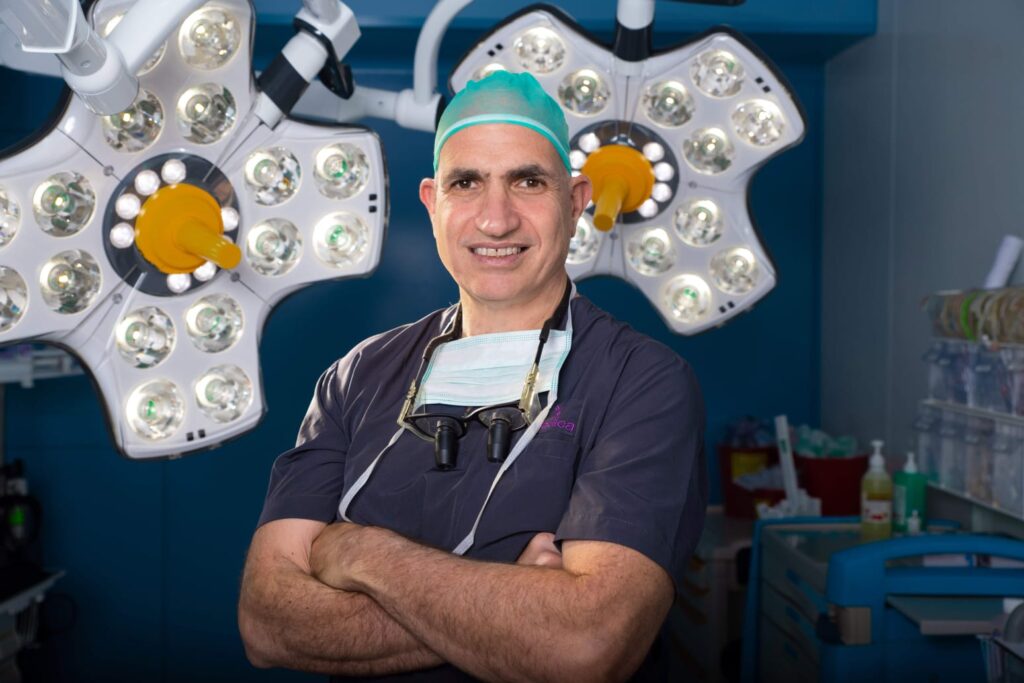
Dr. Shlomi Barak is a male fertility specialist with extensive experience in Obstetrics and Gynaecology. He graduated with honours from the Technion Medical School and completed his residency and specialist training at Bnai-Zion Hospital in Israel. Throughout his medical education, Dr. Barak earned multiple academic awards and scholarships, reflecting his dedication and excellence in the field.