Ultrasound technology is an important part of the diagnostic process when evaluating the cause of male infertility. Ultrasounds is a risk-free test that uses sound waves in order to create images of the inside of the body and does not include any form of radiation.
Scrotal Ultrasound
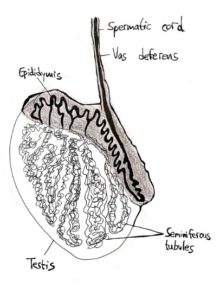
Scrotal ultrasound is used to visualize the testis, epididymis, spermatic cord, and vas deferens, all of which are located inside the scrotal sac. It is non-invasive and painless. This ultrasound can be used to diagnose various conditions associated with infertility, including varicoceles, hydroceles, tumors or cysts, testicular torsion, and inflammation.
Transrectal Ultrasound (TRUS)
TRUS is commonly used to directly visualize the prostate, seminal vesicles, and ejaculatory ducats, and has proven to be important in diagnosing Obstructive Azoospermia. The ultrasound is performed by inserting a probe into the rectum, which may cause discomfort but has no side effects.